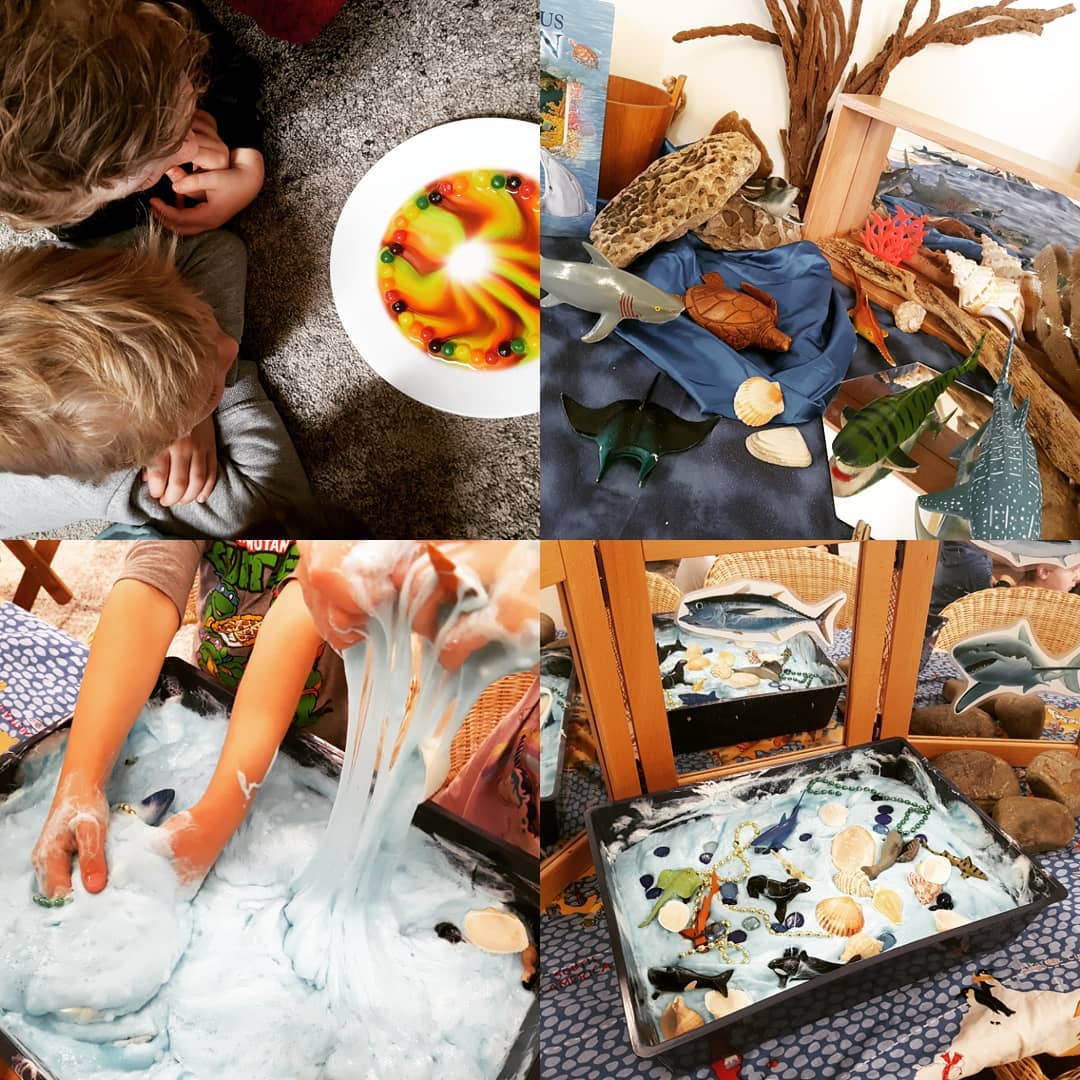
At Lakeview Preschool, we believe some of the most meaningful learning happens when children are deeply engaged in play.
Play-based learning gives children the freedom to explore, investigate, create, imagine and make sense of the world around them. While it may look like children are simply playing, there is often a great deal of learning happening beneath the surface.
Play is how young children learn
Through play, children develop important skills across every area of their development. Building with blocks can introduce early mathematical concepts. Creating a pretend café encourages language, cooperation and problem-solving. Exploring outdoors can lead to discoveries about nature, science and the environment.
When children are interested and involved, learning becomes meaningful.
Building confidence and independence
Play gives children opportunities to make choices, test their ideas and work things out for themselves. Sometimes things don't go as planned — a tower falls, a construction doesn't work or a game needs to be negotiated with friends.
These experiences help children develop persistence, resilience and confidence in their own abilities.
Developing social and emotional skills
Playing alongside others provides countless opportunities to practise sharing ideas, listening, negotiating, taking turns and understanding different perspectives.
Children also learn to recognise and express emotions, resolve disagreements and build relationships — skills that are just as important for school and life as early academic knowledge.
Learning through curiosity and discovery
Young children are naturally curious. They wonder, experiment and ask questions about everything around them.
A play-based environment allows those interests to become the starting point for deeper learning. Rather than simply giving children answers, we encourage them to investigate, experiment and discover possibilities for themselves.
The educator's role in play-based learning
Play-based learning doesn't mean educators simply stand back and watch.
Our educators carefully observe children's interests and development, create engaging environments, introduce new ideas and resources, ask thoughtful questions and extend learning as it happens.
Knowing when to step in — and when to give a child the time and space to discover something independently — is an important part of intentional teaching.
What play-based learning looks like at Lakeview
At Lakeview, our environments are designed to invite curiosity, creativity and exploration. Children have opportunities to build, create, investigate, imagine, move, collaborate and spend time outdoors throughout their day.
Experiences grow from children's interests, their relationships and the world around them, allowing learning to develop naturally while our educators intentionally support each child's individual development.
For us, play isn't something separate from learning.
Play is learning.
