CHILDREN'S COUNCIL
Big ideas begin
with little voices.
At Lakeview, children aren't simply part of our community — they help shape it.
Our Children's Council creates a dedicated space for children to share their ideas, perspectives, concerns and suggestions, and to see that their voices can lead to meaningful action.
CHILDREN'S VOICE IN PRACTICE
Their ideas matter.
Their ideas make a difference.
We believe children have the right to participate in decisions that affect them.
Through the Children's Council, children are encouraged to talk about what is important to them, share what they notice, ask questions, raise concerns and contribute ideas about life at Lakeview.
Educators listen, document and revisit children's ideas so children can see that participation is more than being asked a question — their contributions can genuinely influence what happens next.
HOW IT WORKS
A space to think,
talk and contribute.
We listen.
Children are invited to share their thoughts, ideas, experiences and questions in ways that suit their age, confidence and communication style.
We explore together.
Educators support children to think more deeply, consider different perspectives and explore how their ideas might work in practice.
We take action.
Children's ideas can inform our environments, learning experiences, supervision, safety practices and broader decisions across the preschool.
We revisit.
Children are shown what happened as a result of their contribution, helping them understand that their voice carries meaning and responsibility.
CHILDREN'S COUNCIL IN ACTION
Children helping to
keep Lakeview safe.
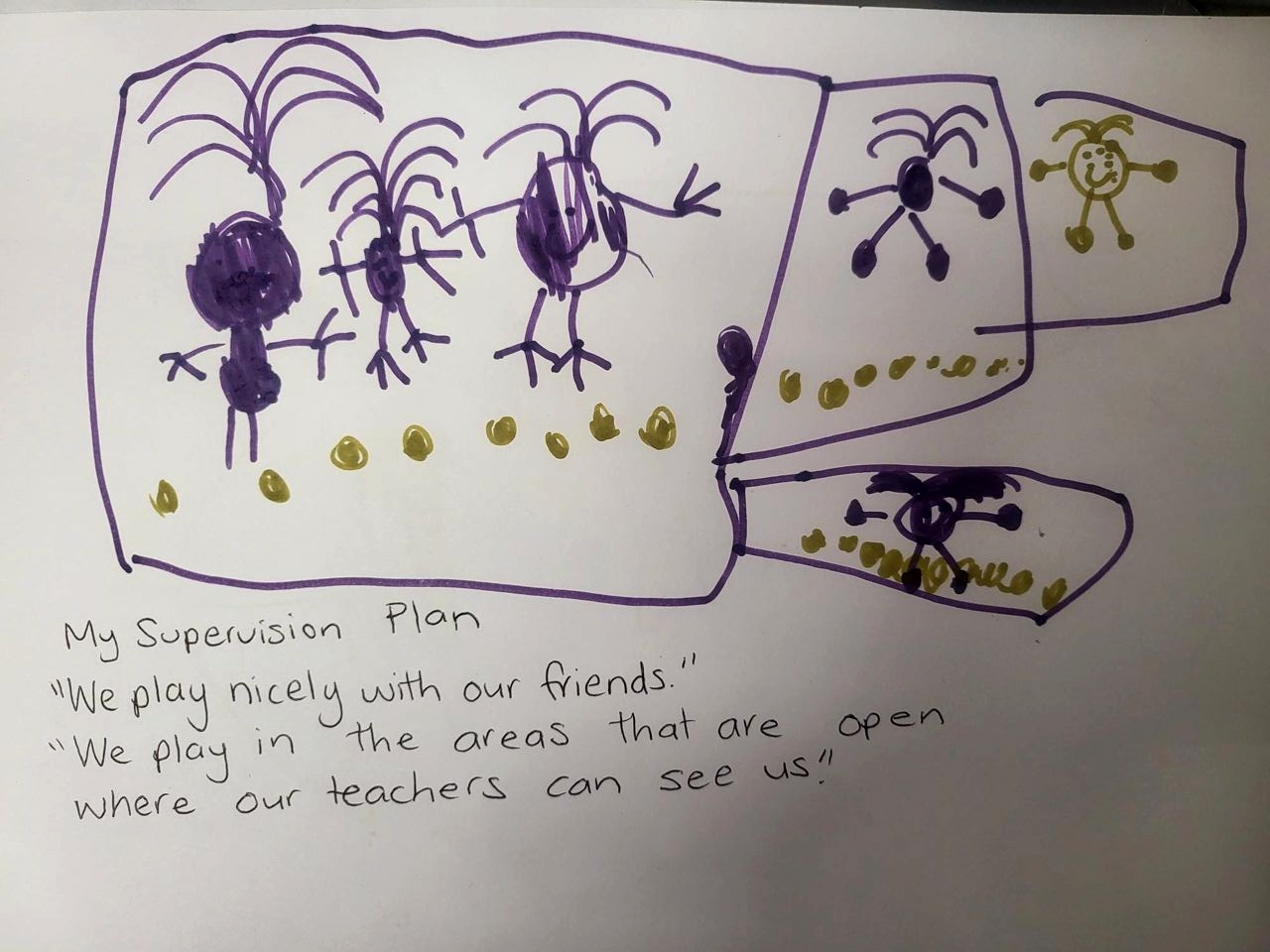
In April 2026, our Children's Council came together to reflect on Lakeview's supervision plans.
Children discussed where they feel safe, where educators should be positioned, which spaces may need closer consideration and where they feel confident being independent.
Children then created their own supervision plans, sharing their understanding of safe play and how educators can support them.
“We play in the areas that are open where our teachers can see us.”
— CHILDREN'S COUNCILFROM VOICE TO ACTION
Children's perspectives
influence real decisions.
Children's Council discussions and children's broader feedback have helped inform:
Supervision
Where educators position themselves and how children experience different areas of the environment.
Risk assessment
Identifying areas children view as safe, challenging or requiring further thought.
Our environments
Children's ideas contribute to how spaces are arranged, reviewed and improved.
Child safe practice
Children's perspectives have contributed to Lakeview's Child Safe Code of Conduct and safeguarding discussions.
Learning
Children's questions, ideas and interests can become part of projects, group discussions and intentional teaching.
Belonging
Children are supported to recognise that they have a meaningful place within the Lakeview community.
OUR CHILD SAFE BOOK
Their voices,
documented and revisited.
One important outcome of our Children's Council work has been the creation of the Lakeview Child Safe Book.
Children, families and educators have contributed ideas about children's rights, safety, trusted adults, respectful relationships and what helps children feel secure within our preschool community.
The book is not a finished display. It is a living resource that children can return to, discuss and continue contributing to as their understanding grows.
RIGHTS & RESPONSIBILITY
Learning that
every voice matters.
Participation helps children build confidence, agency and a growing understanding of their rights.
It also helps children learn that being part of a community means listening to others, considering different perspectives, showing respect and helping care for the people and places around them.
These experiences support children to see themselves as capable contributors whose ideas can influence their world.
EVERY VOICE BELONGS
Participation should
belong to every child.
Children's participation looks different for every child. Not every child will contribute through a large-group discussion or spoken conversation.
Educators also listen through children's play, observations, drawings, gestures, small-group conversations and everyday interactions.
We continually reflect on whose voices may be missing and how we can remove barriers so children of different cultures, abilities, communication styles and experiences can genuinely contribute.
CHILDREN'S COUNCIL
