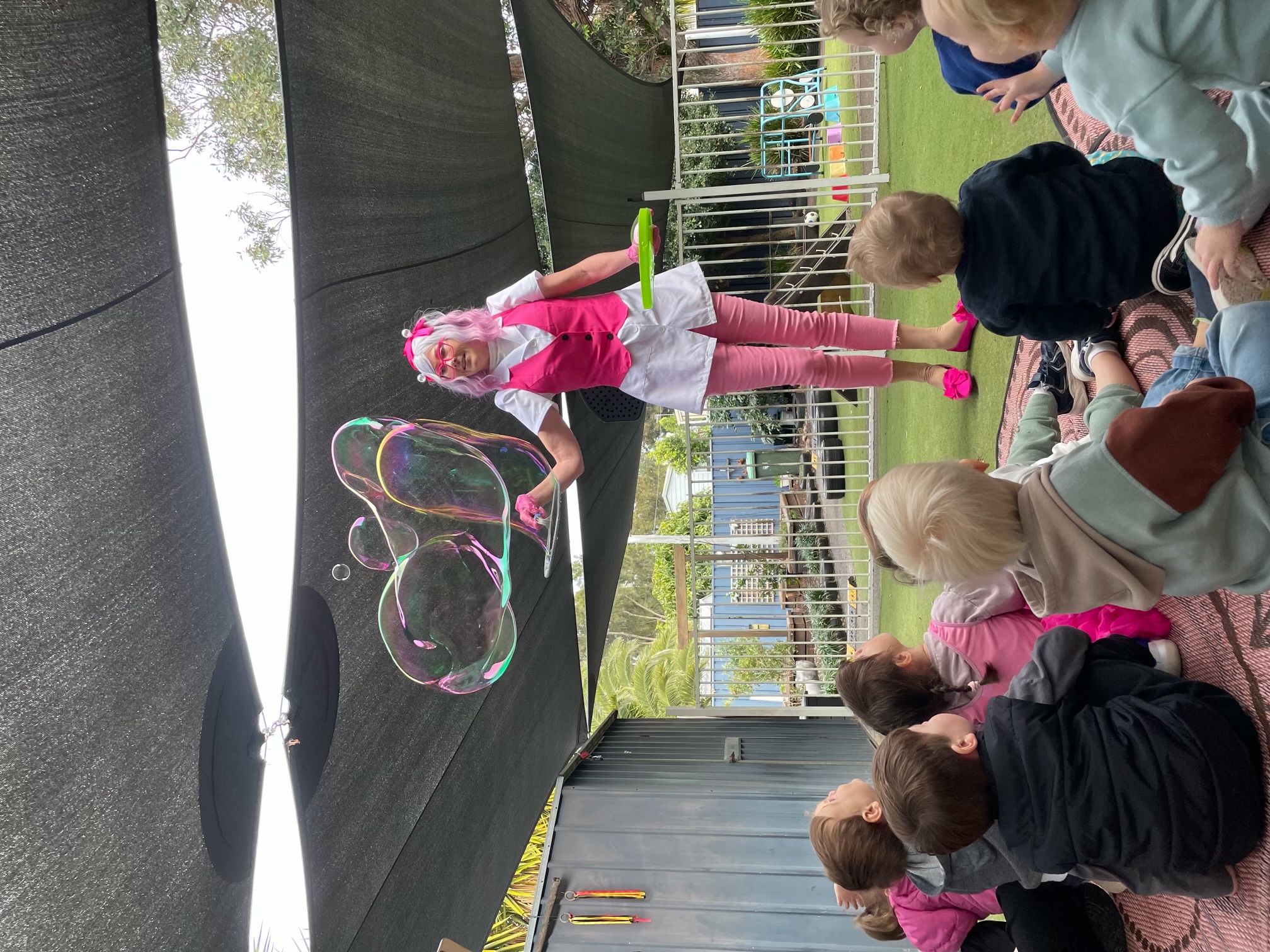
The morning air was electric with anticipation as Lakeview transformed into a place of wonder, discovery and scientific possibility.
National Science Week had arrived, and across our rooms, children were invited to experience science in ways that were playful, sensory and meaningful to their stage of development.
Koala & Wallaby: A Sensory Bubble Experience
For our Koala and Wallaby children, Science Week began with a gentle and engaging sensory bubble experience.
Bubbles floated through the air alongside music and movement as children reached, tracked, touched, chased and popped them. Through their gestures, facial expressions, movement and interactions, even our youngest scientists communicated curiosity, anticipation and delight.
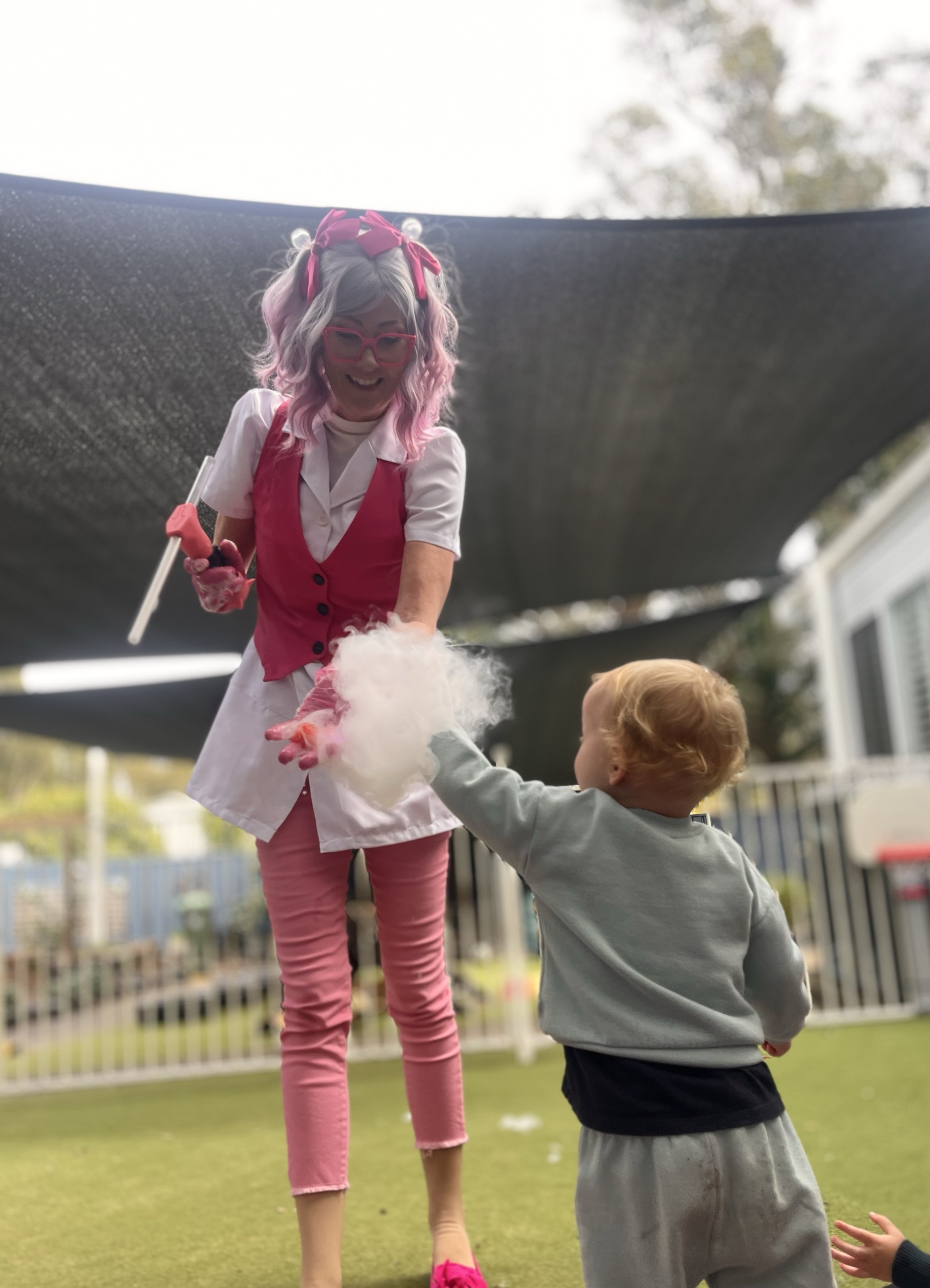
For Leo A, the excitement was simply too enormous to contain. He launched himself into the air again and again, his whole body expressing his anticipation as bubbles appeared around him. His jumping, laughter and movement reminded us that scientific wonder does not always need words. Children communicate their thinking and emotions through their whole bodies.
There were also beautiful moments of shared discovery between Liana and Remi.
“I popped!” Liana announced excitedly.
“Look Liana, I got it!” Remi responded.
Together, they celebrated catching and popping the bubbles, noticing one another’s discoveries and inviting each other into the experience.
The day was particularly special for Liana, who was celebrating her birthday. What a wonderful way to mark the occasion—surrounded by friends, bubbles, laughter and sensory discovery.
As the children watched bubbles rise and fall, anticipated where they might travel, reached towards them and discovered what happened when they touched or popped them, they began exploring early scientific ideas involving movement, air, cause and effect, and prediction.
Platypus: Professor Pop’s Bubble Lab
For our Platypus children, the excitement grew as they slipped into their white laboratory coats and gathered around Professor Pop’s Bubble Lab.
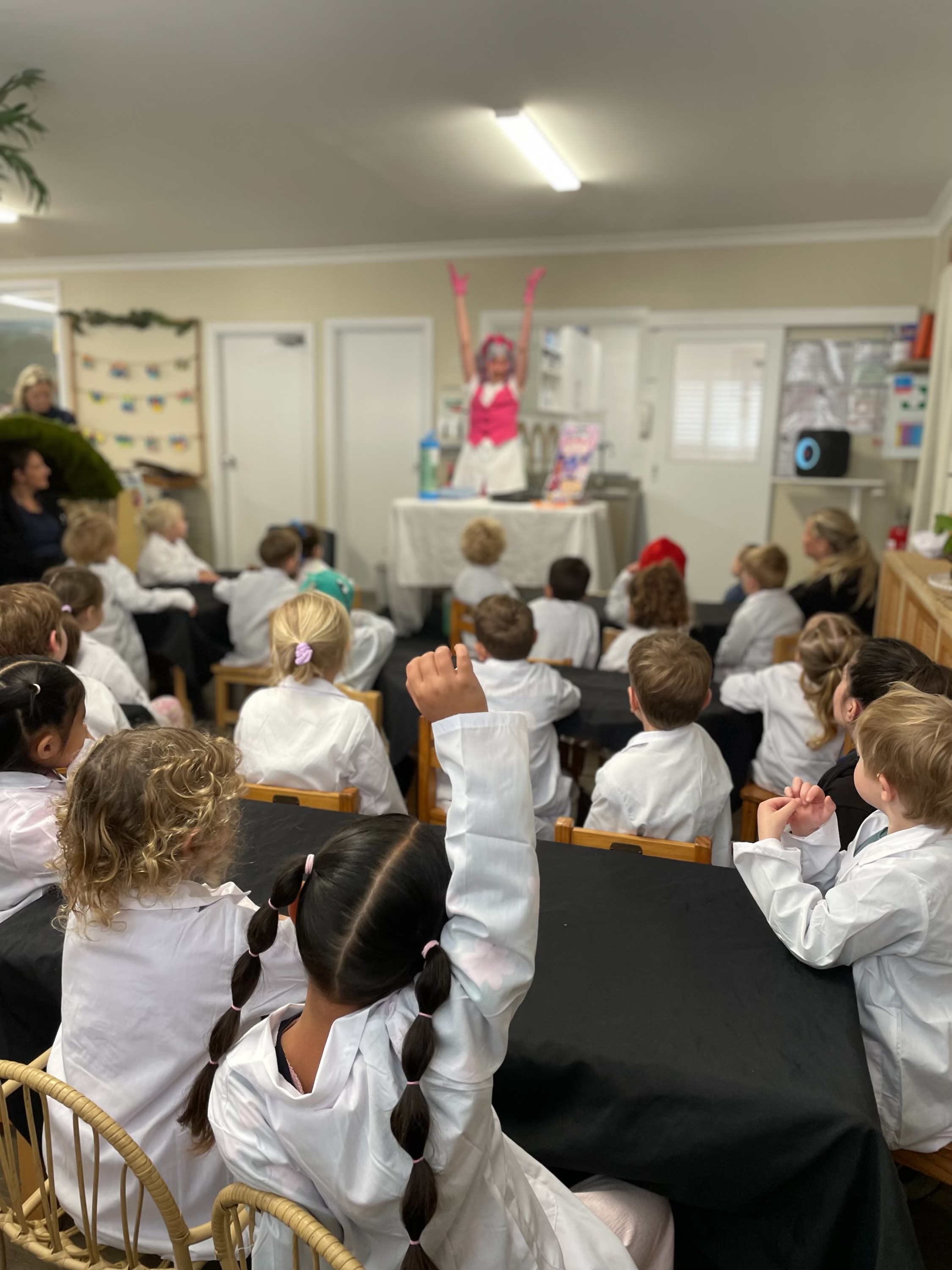
Something seemed to shift as the coats went on. The children stood a little taller, watched a little closer and proudly stepped into the role of scientists.
Then the experiments began.
Professor Pop created enormous shimmering bubbles, bubbles that joined and separated, bubbles that twisted and moved, and bubbles filled with swirling vapour that looked almost like tiny clouds.
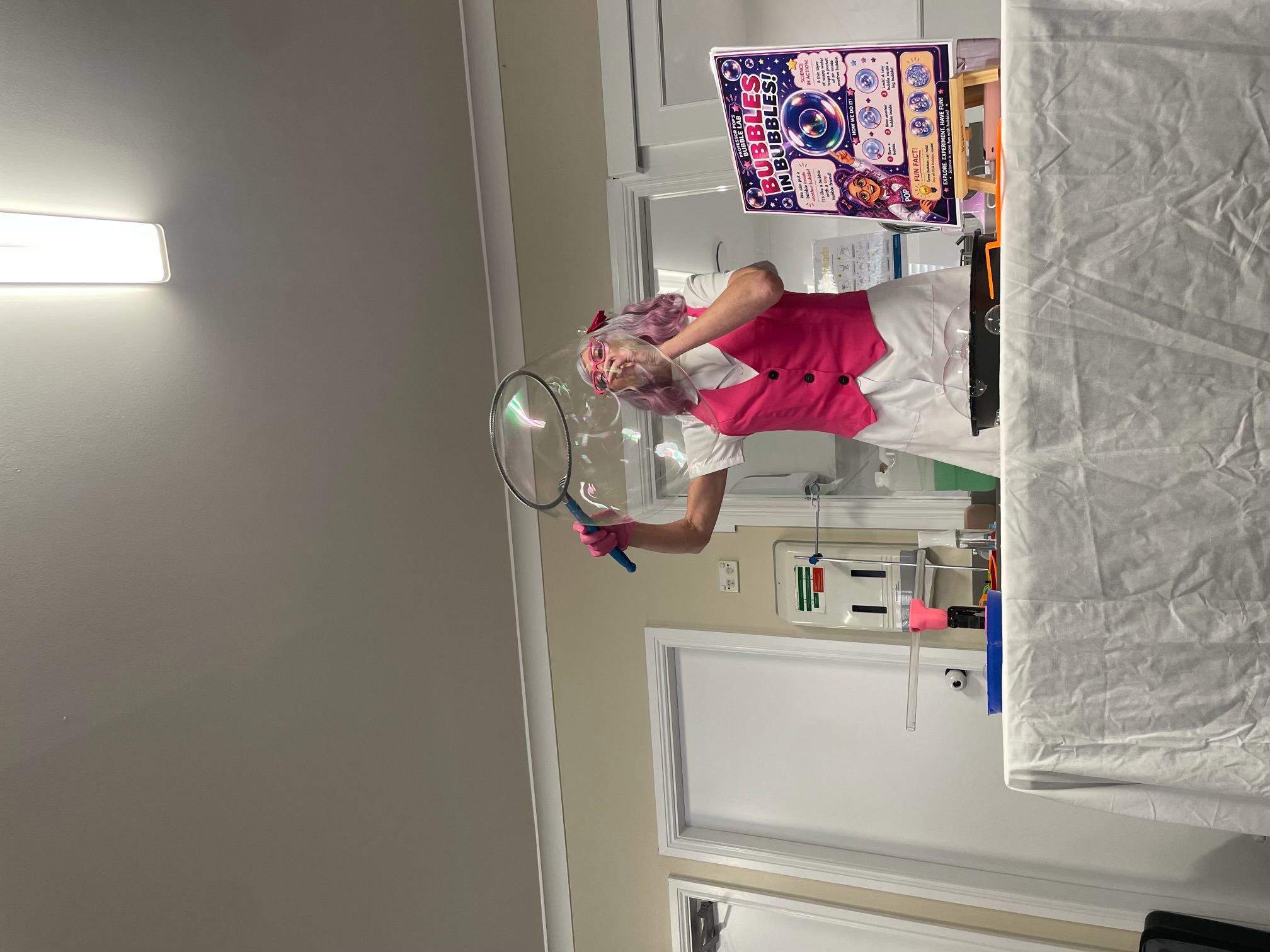
Jonah was immediately drawn to these transformations:
“All the ones with the smoke in the bubble, like the tornado and the kettle.”
His observation captured one of the most fascinating elements of the experience—the opportunity to see gases and vapour behaving in ways that are usually invisible.
As bubbles floated through the room, the children began reaching, predicting, testing and wondering.
Ryder remembered:
“Catching the bubbles.”
Hallie was fascinated by the visual effects of light:
“I liked the big bubble I made on the light.”
Questions naturally began to emerge. How did the bubble become so big? Why did it float? What was inside it? Why did that one pop? How did the vapour get inside the bubble?
Each question became a seed of scientific thinking—an opportunity to observe, develop a theory, test an idea and build new understanding.
Inside a Giant Bubble
Then came the moment everyone had been waiting for.
One by one, the children stepped forward as Professor Pop gently lifted a giant bubble around them. Friends leaned closer, watching as each child became surrounded by a translucent wall of colour and light.
“I liked going in the giant bubble.” — Luna V
“I liked going in the big bubble.” — Saya
“Looking at the bubbles and going inside the giant bubble.” — Lua
“Watching people go in the giant bubble at the end.” — Lottee
“Blowing the bubbles out of my giant bubble.” — Theo
When Koda was asked what he enjoyed most, there was no need to choose:
“All of it!”
Seeds of Science
The 2026 National Science Week school theme, Seeds of Science: Nurturing Knowledge for All, came alive across both experiences.
Whether children were reaching for their first floating bubbles or investigating giant bubbles with Professor Pop, they were invited to wonder, notice, predict, experiment and discover.
Through playful exploration, the children encountered ideas about:
- Air and gases: discovering that something we cannot always see can still fill space and create movement.
- Cause and effect: noticing how blowing, touching and moving changed what happened.
- Surface tension and shape: observing how bubble films stretch and form spheres.
- Movement and forces: watching bubbles rise, fall, float and spin.
- Changing states and matter: noticing liquids, gases and visible vapour.
- Light and colour: observing reflections and rainbow-like colours across bubble surfaces.
- Scientific inquiry: asking questions, making predictions, experimenting and observing results.
Science looked different for each age group, but the foundation remained the same:
Wonder. Exploration. Discovery.
Most importantly, the children were learning that science belongs to them.
It can begin with a reaching hand, an excited jump, a shared “Look!” or the simplest and most powerful question:
What will happen if…?
Where to Next?
The seeds planted during Science Week will continue to be nurtured through our everyday curriculum.
We will revisit the children’s interests through bubble-making, experiments with different tools and solutions, explorations of air and wind outdoors, and investigations into what makes bubbles stronger, weaker, larger or smaller.
Children will continue to represent their emerging scientific theories through drawing, construction, movement, sensory exploration, dramatic play, conversation and experimentation—recognising the many languages children use to understand and communicate their world.
On this day, we did not simply watch bubbles float and pop.
We wondered.
We predicted.
We experimented.
We discovered.
We became scientists.
